
The Genius of the Mid-Century Sideboard
Few pieces of furniture combine storage, style and versatility as successfully as the mid-century sideboard.
Originally designed for dining rooms, sideboards provided a practical place for tableware, cutlery, glassware and serving pieces.
Yet the best examples were never simply storage cupboards. Designers treated them as statement pieces, giving careful attention to their proportions, timber, handles and bases.
Decades later, that balance of practicality and good design is exactly why the mid-century sideboard still works so well in modern homes.
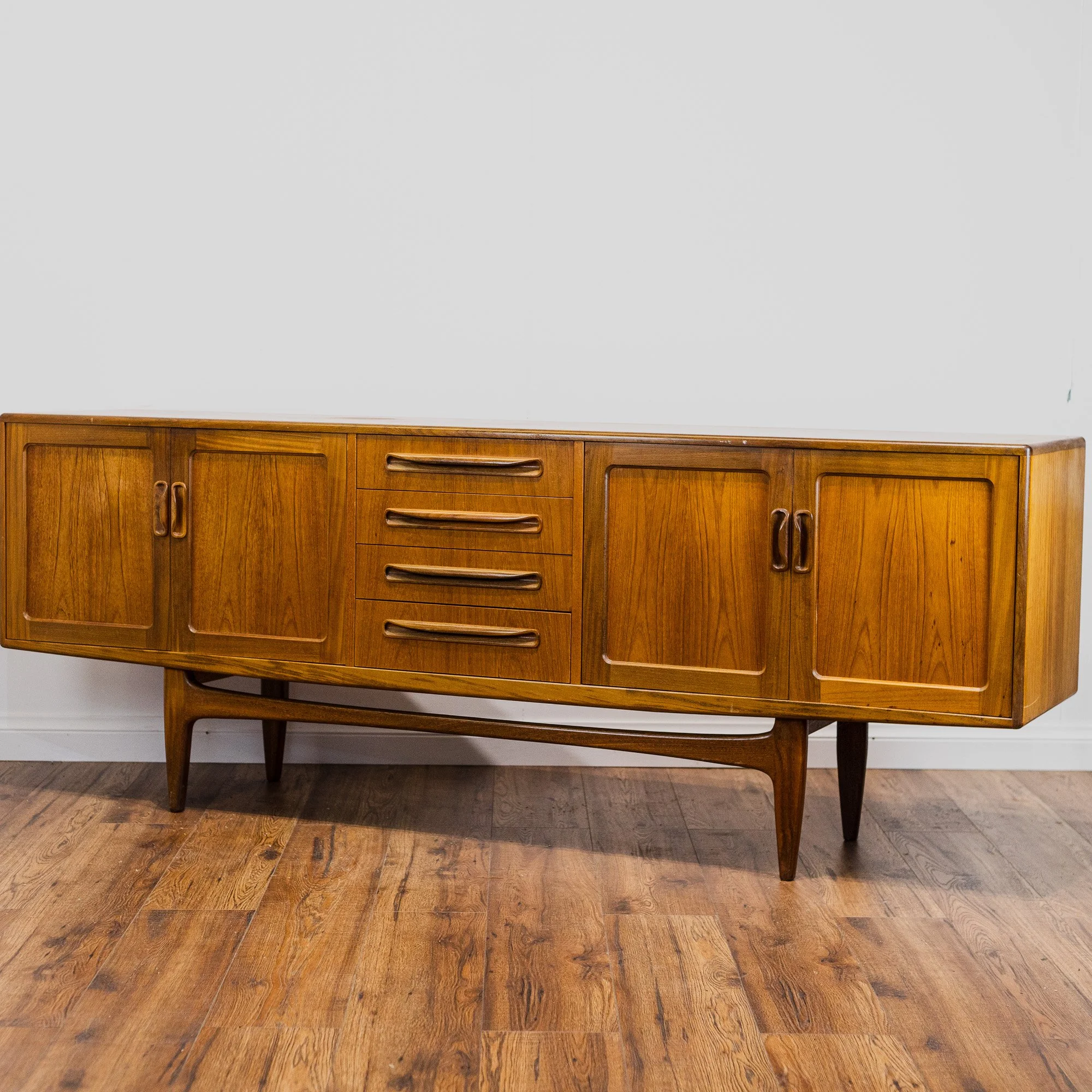
A mid-century sideboard combines generous storage with a clean, elegant profile.
G Plan Fresco Long John teak sideboard designed by Victor Wilkins
One Piece, an Impressive Amount of Storage
One of the greatest strengths of a sideboard is the amount of storage it provides without requiring several separate pieces of furniture.
Most mid-century designs combine cupboards, drawers and internal shelving. This makes it easy to keep everyday clutter hidden while organising everything from plates and glasses to paperwork, records or television equipment.
In a smaller home, replacing several small cupboards with one well-proportioned sideboard can make the room feel calmer and less crowded.
A Low Profile That Makes Rooms Feel Bigger
Mid-century sideboards are often long and low. This horizontal profile draws the eye across the room rather than upwards, helping the space feel wider and more open.
Many also stand on tapered or shaped legs, leaving visible floor beneath the cabinet. Allowing light to pass underneath gives the piece a lighter appearance, even when it offers a substantial amount of storage.
That combination of a low cabinet and raised base is particularly effective in compact living or dining rooms.
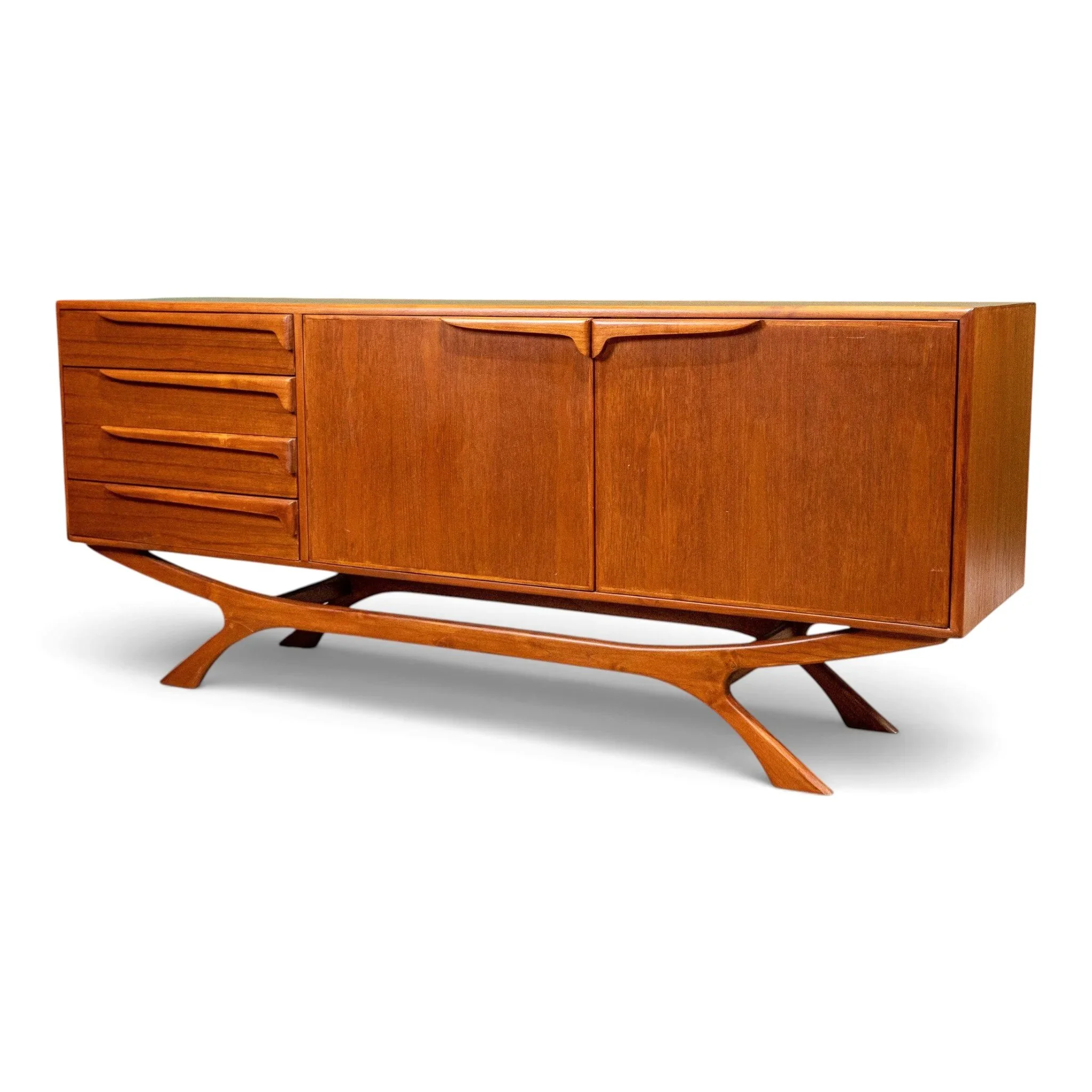
Raised legs and a low profile help substantial storage feel visually lighter. Leg design can be equally as appealing as the sideboard
Beithcraft teak mid-century sideboard with unique splayed legs
Designed to Be Genuinely Useful
The appeal is not only visual. Mid-century designers were exceptionally good at making furniture easy to use.
Sliding doors are ideal where there is limited room in front of the sideboard. Drawers keep smaller items organised, while adjustable shelves accommodate objects of different sizes. Some models also include fitted cutlery trays, drinks sections or fall-front compartments.
These practical details are one reason original sideboards by makers such as G Plan, McIntosh, Nathan, Ercol and Archie Shine remain so desirable today.
It Works in Almost Any Room
Although originally designed for dining spaces, a sideboard can take on a completely different role depending on where it is placed.
In a living room, it can hold a television, record player or drinks collection. In a hallway, it creates useful concealed storage and a surface for a lamp, mirror or artwork. In a bedroom, it can even replace a conventional chest of drawers.
This flexibility makes a good sideboard easier to keep and reuse as your home changes.
The Details Make Each One Distinctive
Mid-century sideboards share clean lines, but they are far from identical.
G Plan designs are often recognised by their sculpted handles and flowing teak grain. McIntosh pieces frequently feature bold proportions and beautifully shaped doors, while Nathan used strong geometric details. Ercol sideboards have a softer character, with warm elm grain and distinctive recessed handles.
The timber, handles, legs and door arrangement all give each maker its own identity. These are the details worth looking at when choosing a piece.

Sculpted handles and characterful timber give each mid-century sideboard its own identity.
Iconic Ercol recessed elm handles, designed by Luciani Ercolani
Choosing the Right Sideboard
Before buying, measure the full wall as well as nearby doorways, radiators and sockets. A long sideboard can look surprisingly balanced on a wide wall, but there should still be enough space around it to prevent the room feeling cramped.

Compact sideboards retain all of the design features in a smaller package
Mcintosh ‘Moy’ teak sideboard - the little brother of the ‘Dunvegan’ model designed by Tom Robertson
Think about what you need to store, too. Drawers are useful for smaller items, while wide cupboards suit tableware, records and larger household objects. If floor space is tight, sliding doors can be more practical than hinged ones.
Condition matters, but small signs of age are normal. The most important points are that the frame is structurally sound, the doors and drawers operate properly, and any condition issues are clearly described.
A Design That Still Earns Its Place
The mid-century sideboard has survived changing interior trends because it solves a genuine problem beautifully. It hides clutter, creates a useful display surface and adds warmth and character without dominating the room.
Whether used in a dining room, living room, hallway or bedroom, it remains one of the most adaptable pieces of vintage furniture you can own.
If you are looking for an original mid-century sideboard, browse our latest collection here:
-> Mid-Century Modern Furniture: https://www.brackenbarninteriors.co.uk/midcentury
Joe
Bracken Barn Interiors